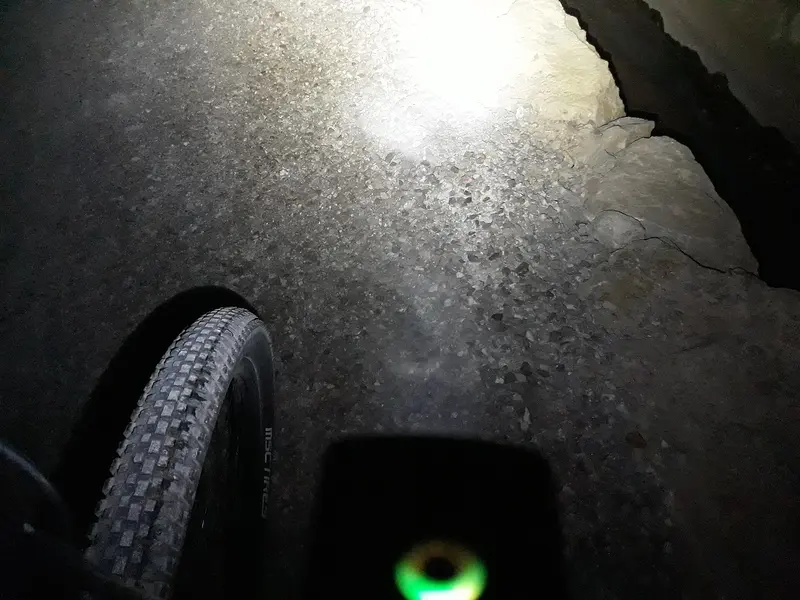
Once the clocks go back, plenty of cycle commutes start in daylight and finish in the dark. This article sets out what the Highway Code’s rules for cyclists say about being seen at night, and how to use an arrival alert on a bike without fiddling with your phone on the move.
It’s general information for Great Britain, not legal advice. The Highway Code page gives the full wording and the laws behind each rule.
What you must have: lights and reflectors
Rule 60 is one of the few rules for cyclists written with MUST, which in the Highway Code means it’s a legal requirement. At night your bike must have:
- a white front light, lit;
- a red rear light, lit;
- a red rear reflector;
- amber pedal reflectors, if the bike was made after 1 October 1985.
Flashing lights are allowed. But the Highway Code recommends that if you ride where there’s no street lighting, you use a steady front light rather than a flashing one.
A light in your bag isn’t a light on your bike. In winter it’s worth carrying them every day, because a delayed train or a late finish can turn a daylight ride into a dark one.
What it recommends you wear
Rule 59 uses “should”, not “must”, so these are recommendations rather than legal requirements:
- Light-coloured or fluorescent clothing helps other road users see you in daylight and poor light.
- Reflective clothing or accessories, such as a belt or arm or ankle bands, can make you more visible in the dark.
- Avoid clothes that could get caught in the chain or a wheel, or that cover your lights. A long coat or a bag hanging off the back can hide a rear light.
- Wear a cycle helmet that meets current regulations, is the right size and is fastened securely.
Riding in the dark
A few other rules matter more when it’s dark and wet:
- Keep control. Rule 66 says you should avoid anything that could reduce your control of your bike, and not carry anything that affects your balance or could get tangled in the wheels or chain.
- Lorries and long vehicles. Rule 76 asks you to take great care when deciding whether to pass stationary or slow-moving lorries, and rule 80 to give long vehicles plenty of room on roundabouts. Their drivers may not see you, and in the dark that’s even more likely.
- Red means stop. Rule 71: you must not cross the stop line when the traffic lights are red.
- Not after a drink. Rule 68: you must not ride under the influence of drink or drugs, including medicine. Worth remembering in party season.
Using ETA on a bike
If someone is waiting for you to get home, ETA can tell them when you’re close, but only if you set it up before you set off:
- Start the journey before you ride. Choose your destination, contacts and alert distance while you’re standing still.
- Mount the phone or pocket it, then leave it. The “nearly there” email goes by itself when you reach the distance or minutes you chose, so there’s nothing to press on the way.
- Remember the screen has to stay on. ETA only gets location updates while its screen is open, as our page on why the screen has to stay open explains. If the phone is in a pocket with the screen locked, the alert may not go. A handlebar mount keeps the screen on, but it uses battery, especially in the cold — our post on phones in the cold has tips.
- Tap “I’ve arrived” once you’ve stopped, or choose the automatic arrival email so you don’t need to.
ETA is not a safety service: it doesn’t watch for accidents or raise any alarm if you don’t arrive. Our safety page explains what it is and isn’t. If you walk the last stretch, our post on being seen walking in the dark covers the Highway Code’s advice for pedestrians.
 · 3 min readPassenger Assist: booking help with a train journeyIf you need help getting on or off a train, finding your way through a station or with luggage, Passenger Assist can arrange it. How to book, how…
 · 4 min readLeft something on the train? How rail lost property worksWho to contact if you leave a bag, phone or coat on a train or at a station, what details to give, and what the National Rail Conditions of Travel…
Lights on, something reflective, phone set up before you go — and a safe ride home.