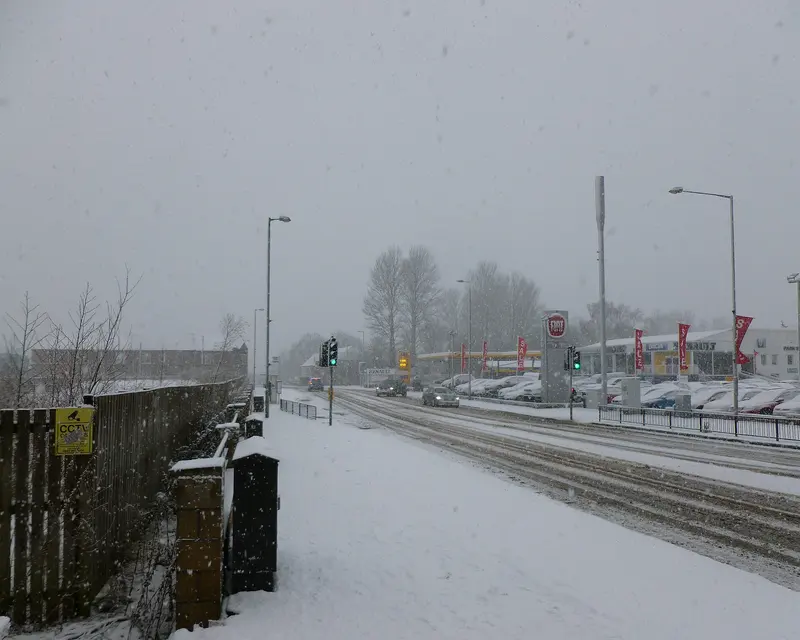
When the weather turns, everything takes longer — and estimates get less reliable. If you use ETA to tell someone you’re ten minutes away, it helps to know how the estimate is made, and how winter conditions can throw it off.
How ETA’s estimate works
ETA’s minutes-away figure is simple on purpose. Your phone measures how quickly you’ve been getting closer to your destination, in a straight line, over the last few minutes, and divides the distance left by that speed. It doesn’t know about roads, timetables, gritting or traffic. How it works goes through it step by step.
That works well when your speed is steady. Winter is exactly when it isn’t.
What winter does to the estimate
- Stop-start trains. A train held at a signal, or running slowly because of the weather, shows up as you suddenly getting no closer. The estimate stretches, then shrinks again when you move.
- Slow walking. On ice you walk more slowly and take safer, longer routes. ETA sees the slower progress after a few minutes, so early estimates can be optimistic.
- Waiting for a connection. If you change trains or buses and wait twenty minutes, ETA sees you standing still. When you’ve stopped, ETA shows the distance only.
- Patchy location. Station canopies and cuttings can make readings less accurate. Location updates only reach pages that are on screen, as the W3C specification says, so keep ETA open.
Choose a distance, not minutes, in bad weather
A time-based alert (“10 minutes away”) depends on your recent speed. A distance alert (“within 2 km”) doesn’t — it goes when you cross the line, however long it took. In snow and ice, a distance is usually more predictable. Pick one that gives the person waiting enough notice even if the last stretch is slow.
The Met Office’s advice for snow and ice
The Met Office’s WeatherReady tips are worth reading before any winter journey. In short:
- Check forecasts, warnings and travel updates before setting off, and plan your route.
- If you drive, check wipers, tyres and screen wash, and pack warm clothing, food, drink, a blanket, a torch, a fully charged phone and an in-car charger. Avoid icy conditions if you can; if you must drive, keep your speed down and accelerate, brake and steer smoothly.
- If you walk, leave about five minutes earlier than usual so you aren’t rushing, use pavements along main roads (likely to be less slippery), and wear shoes or boots with good grip.
Please don’t handle your phone while driving. If you’re driving, let a passenger run ETA, or set the journey up before you leave and then leave the phone alone.
Check the trains before you go
Bad weather and planned engineering work can both change your journey. Over the festive period this year, National Rail is asking people to check their entire journey, and re-check it, because timetables are still being finalised and late changes are possible. The same habit is worth keeping all winter.
Give your people a range, not a promise
ETA’s emails say roughly how far away you are. In winter, it helps to set expectations too:
- Tell the person at home that the trains are slow tonight.
- Choose a bigger alert distance than usual so they’re not waiting outside in the cold.
- If you’re being picked up, use the live ETA link for that journey only, with a short time limit.
- If you’re delayed a long way, a quick call or message from you is still the clearest update.
ETA is a convenience, not a safety service, and emails can arrive late. In an emergency, call 999.
- GuideTips for commuters using ETAPractical tips for using ETA’s wake-me alarm and arrival alerts on trains and buses: distances, battery, sound and signal.
- GuideHow ETA worksWhat ETA does, step by step: setting a destination, the two modes, how the estimate is worked out, and what your browser can and can’t do.
Winter journeys rarely go exactly to plan. A distance alert, a charged phone and a little extra time make the estimate much less important.